Share this article
Lessons on Brand Positioning, Meaningful Difference, and No-Budget Marketing from Invest Ottawa’s Traction Program
Part 3 of the IOFlex Learning Series. Read Part 1 ("Stop Building What Nobody Asked For") on ICP validation and Part 2 ("Your MVP Is Ugly. That Is Exactly the Point.") on sales and early adopters.
The Hook: What Madonna Understood That Most Founders Do Not
In 1984, Madonna released "Like a Virgin" and the world lost its mind. Not because the song was technically superior to everything else on the charts. It was not. But Madonna understood something that most founders still get wrong forty years later: people do not remember what is good. They remember what is meaningful, what is different, and what keeps showing up.
That is brand positioning. And it is the topic that Shea Cole, the session trainer, unpacked for us at the Invest Ottawa Traction program. Shea is the Chief Marketing Officer at Field Effect, was VP of Marketing at Fullscript when the company grew from $20M to $700M in revenue, and served as Head of Advertising at Labatt. When someone with that track record tells you that brand positioning comes before marketing tactics, you take notes.
In the previous blogs in this series, we built a proto-persona named Adam (Blog 1) and learned how to sell to him by leading with pain (Blog 2). This session tackled the question that comes before both: what does your brand actually stand for, and why should anyone care?
Start with Two Questions: For Whom, and For What?
The session opened with two deceptively simple questions that every founder needs to answer before touching a marketing budget. First: what problem does your product solve? Second: whose problem are you solving? If you cannot answer both in the voice of your customer, you are not ready to market anything.
This connects directly to the ICP work from Blog 1, where we built the proto-persona Adam. But this session added a layer of precision that I had been missing. The trainer introduced a framework for defining your ICP using two categories: "Always" and "Usually."
Always vs. Usually: Sharpening the ICP
"Always" describes the defining characteristic that every single customer you serve shares. It is non-negotiable. If someone does not have this trait, they are not your customer. "Usually" describes the common tendencies or averages. These are the patterns you notice, but they are not universal.
The session used a Roomba vacuum cleaner as the working example. The "Always" for Roomba is simple: a person who is responsible for vacuuming at home. That is the base. Everyone who buys a Roomba shares this trait. The "Usually" adds texture: busy, middle-aged, pet owner. These are the patterns that make the ICP sharper, but they are not hard requirements.
This distinction matters because it prevents a common founder mistake: making your ICP so narrow that you exclude real customers, or so broad that your messaging sounds generic. Think of it like casting a movie. The "Always" is the role description. The "Usually" is the type of actor you typically see in that role. You would not reject a perfect audition just because the actor did not match every "Usually" trait.
The Problem Statement: Write It in Their Words, Not Yours
The problem statement exercise pushed us to articulate our customer’s frustration in first person, as if the customer were speaking. Not in corporate language. Not in marketing speak. In the actual words a real person would use when venting to a friend over coffee.
Here is the Roomba example from the session: "I take the time to do a thorough vacuuming a couple times a month, but I am too busy to do it more than that. The problem is, the dirt and pet hair builds up so quickly. It is back as soon as I am done cleaning. I want to keep up with it, because it is embarrassing when my friends come over and my floors are a mess, but I have so many other things I need to do."
Notice how specific and human that sounds. There is no jargon. There is embarrassment, frustration, and a feeling of being stretched too thin. That is what a real problem statement looks like.
If you followed the series from Blog 1, you will recognize Adam in that statement. He is the early-stage CEO generating $1K to $10K MRR who has the money to experiment but not the clarity to know where to spend it. The problem statement gives Adam a voice. And when you put Adam’s voice in your marketing, your outreach, and your sales calls (as we discussed in Blog 2), something shifts. People stop scrolling and start listening.
The Kantar Framework: Meaningful, Different, Salient
The core branding framework in this session came from Kantar, the global market research company. According to their research, the brands that sell the most, command the highest price premiums, and generate the strongest growth share all three qualities in varying combinations: they are Meaningful, Different, and Salient.
Why the Order Matters
Here is where the session challenged a common assumption. Most founders think awareness (salience) comes first. Run ads, get noticed, and the rest will follow. But the Kantar data tells a different story. Brands that grow salience from a position of strong meaningful difference gain three times the market share compared to brands that grow salience from weak equity.
In plain language: getting noticed is easy if you have money. Staying noticed is nearly impossible without substance. You can buy salience for a season, like a one-hit wonder topping the charts in the summer of 1990. But without a meaningful difference, you fade. Vanilla Ice had "Ice Ice Baby" at number one, and then the world moved on because there was no depth behind the hook. Meanwhile, bands like U2 and Depeche Mode kept selling albums for decades because they stood for something specific and kept evolving within that identity.
The Kantar research also showed that consumers are willing to pay significantly more for brands they perceive as different. This aligns with a Warren Buffett observation that was shared in the session: if you can raise prices without losing customers to a competitor, you have a strong business. Differentiation is what gives you that power. Like a rare plant in a garden of common weeds, being different is what draws people in and makes them willing to invest.
What This Means for Founders
The session translated the Kantar framework into three actionable instructions for founders:
- Be meaningful by having a reason to exist, both functionally and emotionally. Your product has to solve a real problem (functional), and your brand has to make the customer feel something (emotional). Roomba does not just clean floors. It gives busy pet owners permission to stop feeling guilty about messy homes.
- Be different by having a unique perspective on the market. Not just a feature comparison chart. A genuine point of view that separates you from everyone else in the category. When Apple launched the original Macintosh in 1984 with the famous Super Bowl commercial, they were not selling a computer. They were positioning themselves as the rebellion against IBM conformity. That is the difference with conviction.
- Be salient by committing to who you are and showing up consistently. Salience is not about being everywhere. It is about being recognizable wherever you show up. Think about the Ghostbusters logo. You see it once and you never forget it. That level of memorability comes from consistency, not volume.
Minimum Viable Brand Positioning: The Framework
The session introduced a practical template called Minimum Viable Brand Positioning. This is the document that sits at the center of everything your brand does. Before you write a single piece of copy, before you design a website, before you post on LinkedIn, this framework needs to be filled out.
It has six components, each built around a central question: why does this brand exist?
- Emotional Benefit: How does the customer feel after using your product? For Roomba, it is feeling proud of your home and relaxed every day.
- Functional Benefit: What does the product actually do? Roomba automatically cleans floors on a schedule, navigates around obstacles, and requires minimal setup.
- Personality: If the brand were a person, how would it behave? Roomba is down-to-earth, dependable, quietly confident, and friendly.
- Promised Experience: What is the end-to-end experience the customer can expect? From setup to support, Roomba promises cleaning that fits real life.
- Brand Values: What principles guide the brand? Roomba values practicality, dependability, simplicity, and everyday life well-lived.
- Brand Ideal (Why We Exist): The one sentence at the center. For Roomba, it is "More living, less cleaning." Four words that capture the entire brand promise.
This framework is essentially the brand’s DNA. Everything, from your website headline to your cold outreach script to the way you respond to a customer complaint, should trace back to these six elements. If it does not, it is off-brand.
The AI Copywriting Prompt: A System, Not a Shortcut
One of the most practical takeaways from the session was a detailed prompt framework for using AI tools to write brand-aligned copy. The trainer showed us a two-part prompt system that treats AI as a strategic writing partner rather than a vending machine for generic text.
The first part establishes the rules: anchor every piece of copy in the stated problem statement, reflect the customer’s lived experience in their language, make the customer the protagonist, show understanding before offering a solution, and never introduce new positioning or invent features. The second part enforces writing discipline based on Strunk and White’s The Elements of Style: omit needless words, prefer concrete language, use active voice, avoid vague intensifiers, and make every sentence earn its place.
What I appreciated about this approach is that it treats the prompt as a strategic document, not a one-time question you type into a chatbox. If you have done the ICP work (Blog 1), built your sales approach around customer pain (Blog 2), and completed your brand positioning (this session), then the prompt becomes the bridge that connects all three to actual content. It is the system that ensures your LinkedIn post, your email sequence, and your homepage all sound like the same brand talking to the same person.
The trainer also emphasized removing all signs that the copy was written by AI. That means no generic motivational phrasing, no formulaic structures, no empty adjectives, no inflated claims, and no predictable startup buzzwords. If the copy sounds like it could belong to any company in any industry, it has failed. Good brand copy should sound like your brand talking to your customer about their specific problem.
Hero Assets: The Five Things Your Brand Needs Before Launch
Before any marketing campaign starts, the session identified five hero assets that every startup needs to have ready. Think of these as the costume, script, and stage for your brand’s first public performance. In The Wizard of Oz, Dorothy does not just show up in Oz and start wandering. She has the ruby slippers, the yellow brick road, and the companions. Your hero assets serve the same purpose: they give your brand direction, credibility, and a path forward.
The Minimum Viable Website
The session broke down the minimum viable website into four essential sections. Your homepage needs to clearly state what you sell, who it is for, and why it is different. Product pages should explain how it works, what the packages or features are, and what pricing looks like. A "Why Us" section tells your story, does a deep dive on your difference, and compares you against the competition. Finally, an FAQ page should answer anything a person might type into Google or ask an AI assistant about your category.
That last point is worth pausing on. In 2026, your FAQ page is not just for humans browsing your site. It is training data for the AI models that your prospects are asking for recommendations. If your FAQ answers the exact questions your ICP types into ChatGPT or Claude, your brand shows up in those answers. That is the new SEO, and most startups are ignoring it completely.
No Budget? No Problem. (Seriously.)
The session addressed the elephant in every early-stage founder’s room: money. Or more specifically, the lack of it. The good news is that the most effective early-stage marketing tactics cost almost nothing. The bad news is that they cost time, consistency, and the willingness to put yourself out there.
Five No/Low Budget Tactics That Actually Work
- Networking (the obvious one nobody does well enough): Show up to events, but do not just attend. Be memorable. The session specifically mentioned founders who wear unique costumes or brand-connected outfits to events. It sounds goofy, but it works. Richard Branson built an entire brand persona around showing up in unexpected ways. You do not have to skydive off a building, but you do need to give people a reason to remember your name after the event ends.
- Organic and lightly boosted social content: Post consistently on the channels where your ICP spends time. The session’s minimum viable content strategy suggests three content themes: Problem (educate on market pain points), Product (show how your solution works), and People (your story, your team, your customers). Rotate between these themes. Stay consistent. Even $20 of boosting on a strong post can triple its reach.
- Partners and affiliates: Find companies that serve the same customer but do not compete with you, and create partnerships. This is how Spotify and Uber partnered early on. Different products, overlapping customers, mutual amplification. An affiliate program, even a simple one, turns happy users into paid promoters.
- Newsletters: Email is still the highest-ROI marketing channel for most B2B startups. A weekly or biweekly newsletter that actually teaches something builds trust faster than any ad campaign. The key is to make it useful, not promotional.
- Local and virtual events: Host your own events. This is the differentiating factor the session highlighted. When you organize an event instead of just attending one, you become the authority in the room. The topic does not have to be about your product. It needs to be about your customer’s problem. The product naturally comes up when people ask what you do.
The common thread across all five tactics is the meaningful difference from the Kantar framework. You do not just network. You network in a way that people remember. You do not just post. You post content with a unique point of view. Every tactic becomes more powerful when filtered through your brand positioning.
The Pilot Campaign: Testing Your Message Before Spending Money
The session walked us through a pilot campaign framework designed for founders who are operating as their own sales, marketing, and product team. The flow moves through six stages: Identify ICP, Engage, Research Request, Demo as Stimulus, Pilot Participation, and Transition to Paid.
The key insight here is that the demo is not a sales pitch. It is a stimulus. You show the product not to close a deal but to paint a picture of what life could look like with the problem solved. If the prospect lights up, then you pivot to a pitch. If they do not, you have just gathered invaluable research data about what your positioning is missing.
Now, here is where I want to add my own perspective, because I think the landscape has shifted since this framework was originally designed. In the era of vibe coding and rapid prototyping, the demo step has become easier to execute but also less differentiating. When anyone with a laptop and a Claude subscription can build a working prototype in a weekend, the demo itself is no longer the competitive advantage. The positioning behind the demo is. Two founders can show nearly identical products, but the one whose messaging is anchored in a validated problem statement, backed by a meaningful difference, will win the meeting every time. The tool is table stakes. The brand is the moat.
Connecting the Series: From ICP to Brand to Revenue
Three sessions in, the IOFlex Learning Series has built a clear progression. In Blog 1, we defined who we are selling to by creating Adam, the proto-persona, and the Hypothesis-Persona Map. In Blog 2, we learned how to reach Adam by leading with pain, building an early adopter group, and structuring a revenue engine from MVP through scale-up. In this session, we learned what to say to Adam by building a brand positioning that is meaningful, different, and salient.
Think of it as a three-act structure. Act One establishes the character (your ICP). Act Two builds the conflict (sales, pain points, and the ugly duckling MVP). Act Three reveals the identity (your brand, your positioning, your voice). Just like in Back to the Future, where Marty McFly cannot get back home until all the pieces align at exactly the right moment, your startup cannot gain real traction until ICP, sales strategy, and brand positioning are working together in sync.
The trainer, Shea Cole, mapped this out as a 90-day timeline. Days 1 through 30: complete your ICP, problem statement, and brand positioning. Days 30 through 60: build your messaging prompt and hero assets. Days 60 through 90: launch your content plan and pilot campaign. That is the sequence. Everything else is a distraction.
Conclusion
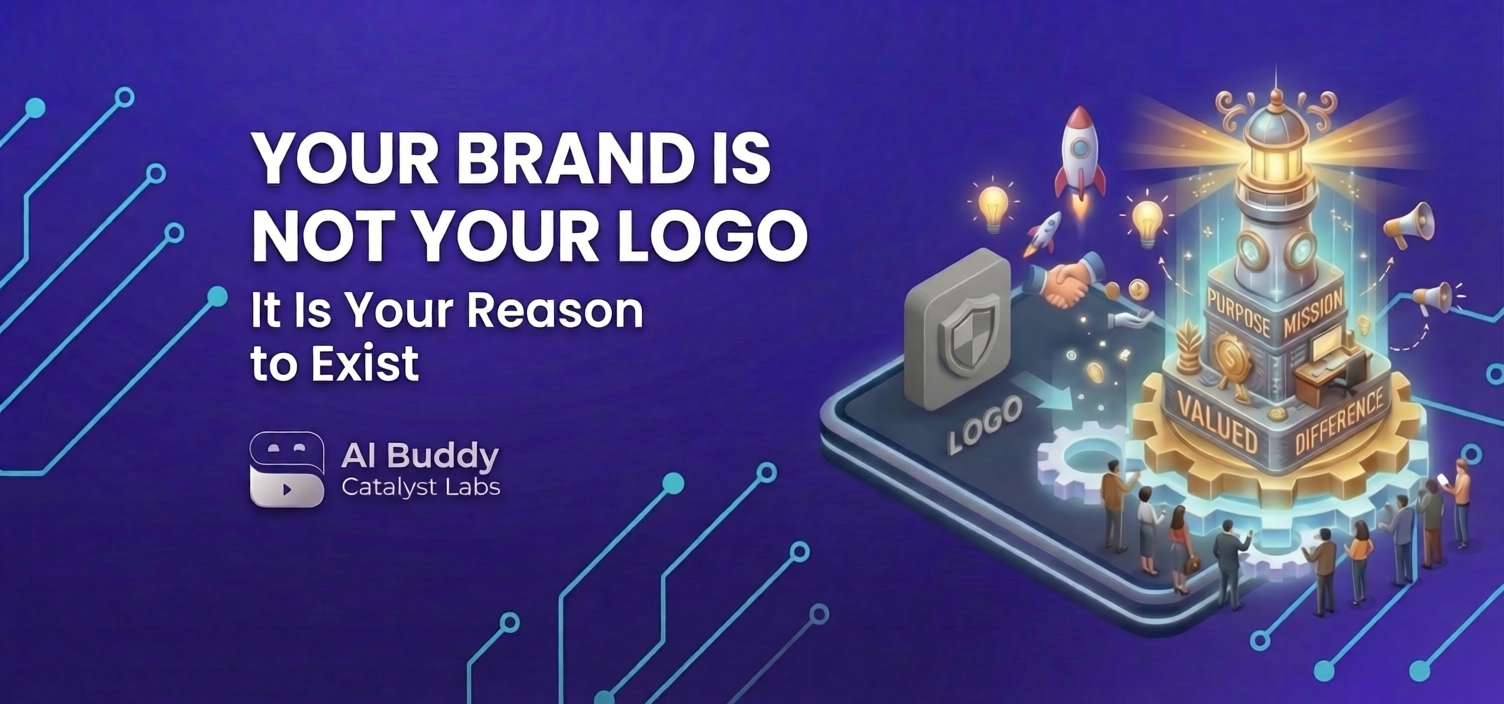
The biggest lesson from this session is that brand positioning is not a design exercise. It is a strategic decision about why your company exists, what makes it different, and how it shows up in the world. You do not need a big budget to build a strong brand. You need clarity about your customer’s pain, a genuine point of difference, and the discipline to show up consistently. The founders who get this right build brands that compound over time. The founders who skip it spend years wondering why good products are not selling.